 blog
Grant Proposal Outline Examples: A Guide to 7 Proven Formats
Last Updated: November 13, 2026
Quick Summary
The seven best grant proposal outline examples are the standard federal outline, the foundation letter of inquiry outline, the nonprofit community funder example, the academic research outline, the program expansion narrative outline, the templates approach for small teams, and the funded examples model for repeat applicants. Choose the format that matches your funder type, request size, and review criteria.
- Federal reviewers score against a published rubric, so mirror it section by section.
- Foundation letters of inquiry usually run one to two pages and act as a filter.
- Community funders weigh local impact and relationships as heavily as formal scoring criteria.
- Academic funders score rigor and feasibility above narrative polish.
- Expansion proposals must prove current capacity before asking for growth.
Table of Contents
- Why the Right Grant Proposal Outline Decides Your Funding Request
- Outline 1: The Standard Federal Grant Proposal Outline
- Outline 2: The Foundation Letter of Inquiry Outline
- Outline 3: The Nonprofit Grant Proposal Example for Community Funders
- Outline 4: The Grant Proposal Outline for Students and Academic Research
- Outline 5: The Project Narrative Outline for Program Expansion
- Outline 6: The Grant Proposal Writing Templates Approach for Small Teams
- Outline 7: The Successful Grant Proposal Examples Model for Repeat Applicants
- How to Choose the Right Outline for Your Grant Type
- Common Outline Mistakes and Compliance Checks
- Start With Structure, Then Build Skill
- Frequently Asked Questions
Why the Right Grant Proposal Outline Decides Your Funding Request
A grant proposal outline is the structural map that tells a funder where each required element lives in your application.
The stakes are simple. Funders read dozens of applications in a single sitting.
This guide from American Grant Writers Association walks through seven outline formats. Each one fits a different funder type and request size. Below, you'll see which outline to use, what each section should contain, and how to adapt it without breaking compliance.
The core tension most writers miss: an outline is not a formality. Broader nonprofit grant seeking best practices reinforce the same point: structure follows the funder's rules, not your preferences.
Outline 1: The Standard Federal Grant Proposal Outline
The standard federal outline follows the funder's published application structure, typically a cover letter, abstract, organizational background, statement of need, project narrative, evaluation plan, and budget with justification.
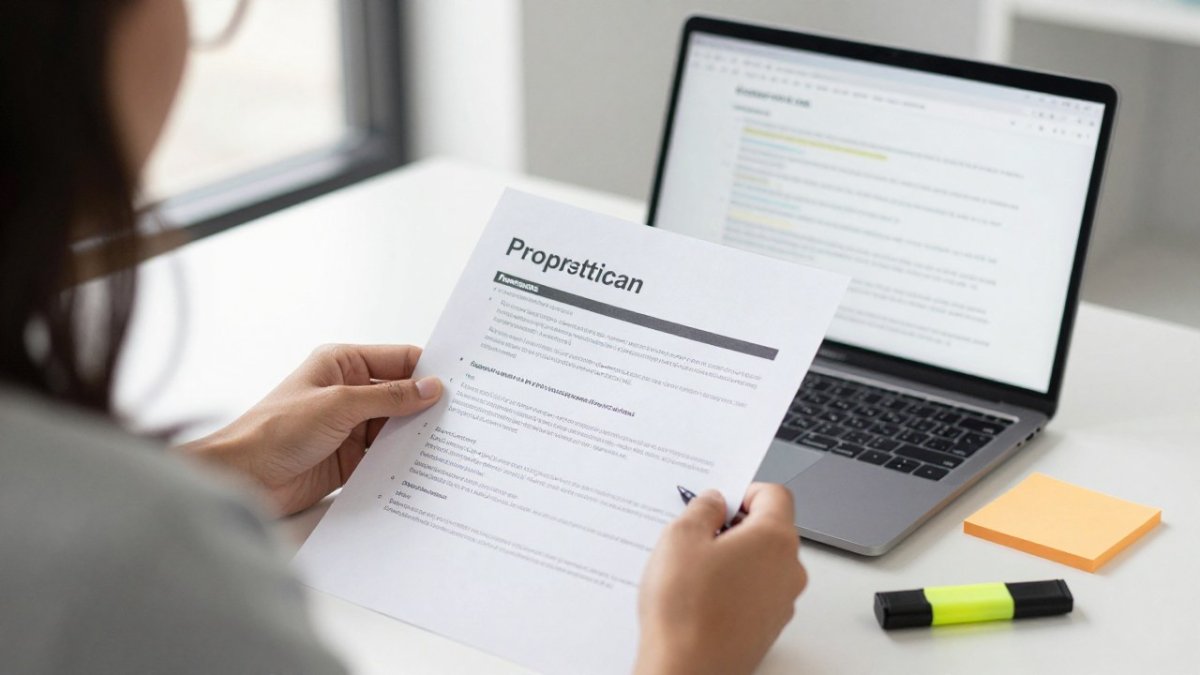
Here is what the standard format usually includes:
- Cover letter and letter of inquiry, when the funder allows one
- Abstract or executive summary, often capped at a set word count
- Organizational background and capacity
- Statement of need with supporting evidence
- Project description, methods, and work plan
- Goals, SMART objectives, and measurable outcomes
- Evaluation plan and performance indicators
- Budget and budget justification
- Supporting documents and attachments
Watch out: the most common federal mistake is reusing a prior year's outline after the funder updates its rubric. For deeper guidance on writing a winning federal submission, see how to write a winning advanced grant proposal.
What the Standard Outline Includes
Each federal section maps to a scoring criterion. The statement of need should cite data and evidence. The project narrative should connect activities to outcomes. The budget justification should explain every line item.
Reviewers reward alignment. When a section answers a stated criterion directly, it scores. When it wanders, it doesn't.
Outline 2: The Foundation Letter of Inquiry Outline
The foundation letter of inquiry outline is a short pre-proposal, usually one to two pages, that asks a private funder whether a full application is welcome. It covers the organization, the need, the project, the amount requested, and the fit with the funder's priorities.
Private foundations often prefer a letter of inquiry before a full proposal. The structure stays lean:
- One-paragraph organizational introduction
- Statement of need tied to the funder's focus area
- Brief project description and target population
- Funding request amount and intended use
- Closing paragraph on fit and next steps
The letter of inquiry is a filter, not a summary. Funders use it to decide whether to invite a full application. Write it to earn that invitation, not to compress the entire proposal.
Outline 3: The Nonprofit Grant Proposal Example for Community Funders
A nonprofit grant proposal example for community funders emphasizes local impact, accessible language, and clear community benefit over dense technical detail. Community foundations and local funders often weigh relationships and neighborhood outcomes as heavily as formal scoring criteria.
This outline typically includes:
- Community need statement with local data
- Organizational background and community ties
- Project description with a realistic timeline
- Measurable outcomes framed around beneficiaries
- Budget with clear local cost assumptions
- Sustainability plan beyond the grant period
Community funders read for authenticity. A common mistake is importing a federal-style narrative into a local application. It reads as overbuilt and impersonal. Ethical framing matters here too, so ethical grant writing practices for nonprofits are worth reviewing before you submit.
Outline 4: The Grant Proposal Outline for Students and Academic Research
The grant proposal outline for students and academic research follows a research-first structure: background and literature, research question, methodology, timeline, budget, and expected contribution to the field. Academic funders score rigor and feasibility above narrative polish.
Key sections in this format:
- Introduction and problem statement grounded in literature
- Research questions or hypotheses
- Methodology and data sources
- Project timeline and milestones
- Budget with justification for personnel and materials
- Expected outcomes and dissemination plan
Students often underbuild the methodology section. Reviewers want to see that the project can actually be completed within the funding period. A realistic timeline and a clear methods section carry more weight than an ambitious claim.
Outline 5: The Project Narrative Outline for Program Expansion
The project narrative outline for program expansion centers on scale: what exists now, what the funding adds, and how the organization will sustain the growth. Expansion proposals must prove current capacity before they ask for more.
Structure it around these blocks:
- Current program description and proven results
- Evidence of demand for expansion
- Expansion plan with activities and implementation steps
- Staffing and capacity to deliver at scale
- Evaluation plan for the expanded program
- Sustainability and funding diversification
The trap here is asking for growth without proof of current performance. Funders fund expansion when the base program already works. Show the track record first, then the plan.
Outline 6: The Grant Proposal Writing Templates Approach for Small Teams
Grant proposal writing templates give small teams a repeatable structure so every application starts from a tested framework instead of a blank page. Templates reduce drafting time and keep required sections from being skipped.
A practical template set includes:
- A master outline with all standard sections
- Reusable organizational background and capacity language
- A budget worksheet with justification prompts
- A compliance checklist tied to submission requirements
- A review schedule with internal deadlines
Small teams often lack dedicated grant staff. Templates help, but they do not replace skill. A common mistake is submitting templated language without customizing it to the funder's guidelines. Reviewers notice boilerplate.
Outline 7: The Successful Grant Proposal Examples Model for Repeat Applicants
The successful grant proposal examples model is a learning structure for repeat applicants: study funded proposals, extract the patterns that worked, and rebuild your outline around them. It turns past wins into a repeatable process.
Repeat applicants should focus on:
- Comparing funded examples against the funder's stated criteria
- Identifying section lengths and evidence patterns that scored well
- Documenting what reviewers praised or questioned
- Building a living outline library by funder type
- Scheduling a post-submission review after every cycle
The goal is continuous improvement, not copying. Funded examples show structure and evidence standards, not language to reuse. For a step-by-step method, see improving grant proposal success rates.
How to Choose the Right Outline for Your Grant Type
Choosing an outline starts with the funder's guidelines, not your comfort zone. Match the outline to the funder type, the request size, and the review criteria before drafting.
Use this comparison to pick quickly:
| Outline | Best For | Key Sections | Watch For |
|---|---|---|---|
| Standard Federal | Government grants | Abstract, narrative, evaluation, budget | Rubric alignment |
| Letter of Inquiry | Private foundations | Need, project, request, fit | Keep to 1-2 pages |
| Community Funder | Local foundations | Local need, outcomes, sustainability | Avoid federal-style bloat |
| Academic Research | Students, researchers | Methods, timeline, dissemination | Build methodology fully |
| Program Expansion | Growing programs | Current results, expansion plan | Prove current capacity |
| Templates | Small teams | Master outline, checklist | Customize every time |
| Funded Examples | Repeat applicants | Pattern review, outline library | Don't copy language |
The pattern is consistent: the funder's guidelines decide the outline. Everything else is adaptation.
Common Outline Mistakes and Compliance Checks
Most outline failures are compliance failures, not writing failures. A missing section, a wrong order, or a page limit exceeded by two lines can cost points before a reviewer reads the narrative.
Before you draft: eligibility and instructions
- Confirm the applicant is an eligible entity type under the solicitation, many federal programs restrict who can apply, and a strong proposal from an ineligible organization is disqualified on arrival (Grant Eligibility).
- Register and verify accounts early. Federal applicants typically need an active registration in the System for Award Management (SAM) and a Grants.gov account, and registration can take days to weeks to activate.
- Download the funder's full notice of funding opportunity and read the review criteria, not just the section list. The criteria tell you which sections carry scoring weight.
While you draft: structure and limits
- Build the outline in the funder's exact order. Reviewers often score in sequence, and a reordered narrative forces them to hunt.
- Check page and word limits per section, not just overall. A common trap is a total page limit that hides a tighter limit on the project narrative.
- Confirm formatting rules: font size, margins, line spacing, and file type. Federal systems may reject a file that does not meet the posted format.
- Verify the budget totals and that every line item in the justification appears in the budget worksheet, and vice versa.
Before submission: attachments and review
- Match attachments to the funder's checklist, letters of commitment, IRS determination letter, audited financials, and any required forms.
- Re-read the scoring criteria against your outline one section at a time, and note where a criterion has no matching section.
- Build a backward-planned schedule: assign a draft owner for each section, set an internal review date at least a week before the deadline, and leave buffer for partner signatures and portal uploads.
- Submit early. Portals slow down near deadlines, and a late upload is treated as a late application regardless of draft quality.
A simple rule helps: read the guidelines twice, once for content and once for structure. The second read catches the compliance gaps the first read misses. Teams that want a repeatable review process can pair this checklist with the template approach in Outline 6.
Start With Structure, Then Build Skill
The outline is where every funding request begins, and it is where most applications quietly fail.
That is the structural half. The other half is skill: reading a funder's criteria, writing a persuasive need statement, building a defensible budget, and managing funds after the award.
Strong outlines win reviews. Strong writers win funding. Get started with American Grant Writers Association and turn a compliant outline into a competitive proposal.
Frequently Asked Questions
What are the main sections of a grant proposal outline?
Most grant proposal outlines follow a core sequence: executive summary or abstract, organizational background and capacity, statement of need, project description with goals and SMART objectives, methods and implementation plan, evaluation plan with measurable outcomes, budget and budget justification, and sustainability. Federal outlines add a cover letter and detailed attachments, while foundation outlines often compress these into a two-page letter of inquiry. Build your outline from the funder's guidelines first, then map these sections onto their required order.
How long should a grant proposal be?
Length is set by the funder, not by preference. Federal program solicitations typically cap the project narrative at a specific page count and reject anything over it. Private foundations often ask for a one- to two-page letter of inquiry before inviting a full proposal of five to fifteen pages. A nonprofit grant proposal example from a community funder usually runs shorter than a federal submission. Read the submission requirements line by line and treat the page limit as a compliance rule, not a suggestion.
Can I reuse one grant proposal outline for every funder?
Reuse the structure, not the content. A grant proposal writing template saves time on formatting, section order, and internal review, but every submission needs the statement of need, goals, and budget tailored to that funder's priorities and funding criteria. Reviewers notice recycled language quickly. Keep a master outline with placeholder sections, then rewrite the need statement and outcomes for each application so the proposal reads as though it was written for that funder alone.
Where can I find successful grant proposal examples?
Start with funder-published resources: many federal agencies and large foundations post sample proposals or annotated award abstracts. University research offices and nonprofit resource centers also share successful grant proposal examples with the applicant's permission. When you study one, focus on how the writer connects the statement of need to measurable outcomes and how the budget justification ties each line to an activity. Formal training in proposal development, such as the online courses offered by the American Grant Writers Association, can help you apply these lessons.